
 EN
EN

EU CE-1143 Certification Levels for Safes
Walking into a bank or a high security retail store, you will likely notice the imposing presence of a safe. It stands as a silent guardian of valuables, from important documents to irreplaceable heirlooms. But have you ever wondered what truly lies beneath that thick layer of steel? How can you be certain it can withstand a determined burglary attempt? This is where the EU CE-1143 certification comes into play, serving as a critical benchmark for security and quality. For manufacturers, distributors, and consumers alike, understanding this certification is not just beneficial—it is essential for making informed decisions about security solutions. This article will guide you through the intricacies of the EN 1143 standard, demystifying its requirements, classification levels, and the rigorous testing process that gives certified safes their authoritative stamp of approval.
Understanding the EN 1143 Standard
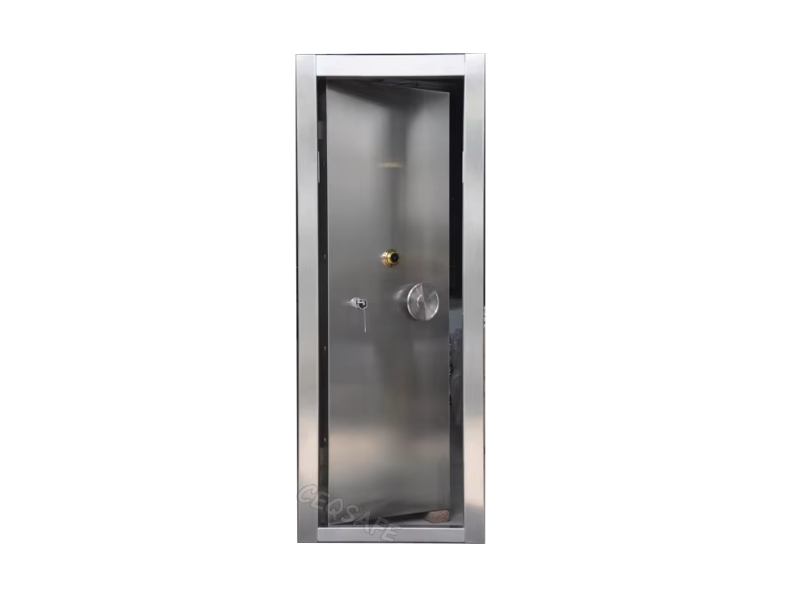
The EN 1143 standard is a comprehensive European framework developed to evaluate the burglary resistance of secure storage units. Its primary purpose is to establish consistent requirements, classification methods, and test procedures that ensure a safe performs as expected under attack. This standard is divided into several parts, with EN 1143-1 covering safes, ATM safes, strongroom doors, and strongrooms, and EN 1143-2 specifically addressing deposit systems like night safes and deposit safes . A new version of EN 1143-2 was approved in 2024, highlighting the continuous evolution of this standard to address emerging security challenges .
The scope of EN 1143-2 encompasses two main types of deposit systems. Night safes are typically used by financial institutions, allowing customers to make deposits outside of banking hours without accessing the safe's main contents. Deposit safes, on the other hand, are designed for use within a company's premises, enabling employees to securely store money or valuables without having full access to the safe's interior . The standard meticulously outlines the components of these systems, which include a receiving unit, an input unit, and sometimes a chute . It is important to note that while the standard includes design requirements for programmable controllers and their associated software, it explicitly excludes testing for software vulnerability to hacking, fraud prevention by operators, and the protection of persons using the system . The certification process involves rigorous testing by independent, accredited bodies who verify that the product meets all the stipulated requirements, ensuring an unbiased assessment of its security capabilities.
Decoding the Certification Levels
One of the most critical aspects of the EN 1143 standard is its clear and detailed classification system. Safes and deposit systems are assigned a rating based on their demonstrated resistance to burglary attempts. This rating is not arbitrary; it is determined through a series of controlled tests that simulate real world attack scenarios. The classification is directly tied to the value and type of assets the safe is intended to protect, providing users with a reliable guide for selecting the appropriate level of security.
The certification levels are typically represented by roman numerals or numbers, indicating the safe's resistance grade. While the specific grading scale can vary, higher numbers invariably signify a greater level of security. For example, the standard may classify safes from grade 0 up to grade VI or beyond, with each grade corresponding to a specific set of performance criteria against tools like mechanical instruments, torches, or explosives . This granular classification allows buyers to match the safe precisely to their risk profile. A small business storing daily cash might opt for a grade III or IV safe, while a jewelry store holding high value items would require a grade V or VI safe. The latest version of the standard, EN 1143-2:2024, continues to use this robust classification system to categorize deposit systems according to their burglary resistance .
The Rigorous Testing Process
Achieving an EN 1143 certification is no simple feat. It subjects safes to a brutal battery of tests designed to push them to their limits. The goal is to simulate the methods a skilled burglar might use, evaluating the safe's ability to resist these attacks for a predetermined period. The entire testing process is conducted under strict laboratory conditions to ensure consistency and fairness across all products.
The tests cover a wide range of attack vectors. Mechanical attacks involve the use of tools like drills, grinders, and pry bars in an attempt to breach the safe's door or body. Thermal attacks utilize oxy-fuel torches and other heating tools to test the safe's resistance to extreme temperatures and its ability to protect contents from heat damage. In higher grades, the standard may also evaluate resistance to explosives, assessing the structural integrity of the safe after a controlled detonation. Furthermore, the standard includes tests for deposit systems, evaluating their resistance to specific theft techniques targeting the deposit mechanism itself . The duration of these tests varies depending on the targeted security grade, with higher grades requiring longer and more intense attack sequences. For systems with electronic components, the hardware, such as electric motors and sensors, is also tested against mechanical or electromechanical attacks, though software-level attacks are outside the standard's current scope .
Why This Certification Matters for Your Business
Selecting a safe with the appropriate EN 1143 certification is a strategic business decision that goes beyond mere compliance. It is an investment in security, trust, and risk management. For any enterprise that handles cash, valuables, or sensitive data, a certified safe provides a foundational layer of physical security that can deter theft, reduce losses, and provide peace of mind.
From a risk management and insurance perspective, the certification is invaluable. Many insurance companies recognize EN 1143 ratings and may offer reduced premiums for businesses that use certified safes. This is because the certification provides a clear, independent verification of the safe's security level, allowing insurers to accurately assess the risk. In the event of a burglary, having a certified safe that withstood the attack can be crucial for a successful insurance claim. Furthermore, displaying the certification mark on a safe acts as a powerful market differentiator. It signals to customers and partners that your business takes security seriously, enhancing your brand's reputation for reliability and professionalism. It provides a competitive edge in markets where security is a primary concern for clients. Ultimately, understanding and applying the EN 1143 standard ensures regulatory compliance in many regions and, most importantly, delivers peace of mind. Knowing that your assets are protected by a product that has been proven to resist sophisticated attacks allows you to focus on running your business without constant worry about its physical security.
Navigating the Revised Standards
Standards for security are not static; they evolve continuously to counter new threats and incorporate technological advancements. The EN 1143 standard is no exception. A new version of EN 1143-2 was published in 2024, succeeding the previous 2014 edition, which has been withdrawn . This highlights the importance of staying current with the latest requirements to ensure ongoing compliance and optimal security.
For manufacturers and consumers, this evolution means that a safe certified to an older version of the standard may not meet the latest security benchmarks. Ensuring compliance with the latest standard is the best way to guarantee that your security solution is equipped to handle contemporary threats. It is a proactive step towards safeguarding your assets effectively in an ever-changing risk landscape.

