
 EN
EN

Classification Standards for Safe Fire Ratings
Imagine returning to your home or office after a fire incident. Amidst the devastation, your eyes fall upon your safe. With bated breath, you open it to discover your most critical documents, valuable data, and precious heirlooms completely untouched by the inferno that raged around them. This isn't just luck; it's the direct result of choosing a safe with a certified and appropriate fire rating. Fire ratings are more than just numbers on a spec sheet; they are a precise language of protection, telling you exactly how your safe will perform when it matters most. For anyone looking to protect their assets, understanding these classifications is not optional—it's essential. This guide will demystify the key classification standards for safe fire ratings, using a specific high-performance model as a reference to illustrate what these standards mean in practical terms.
The Foundation of Fire Ratings
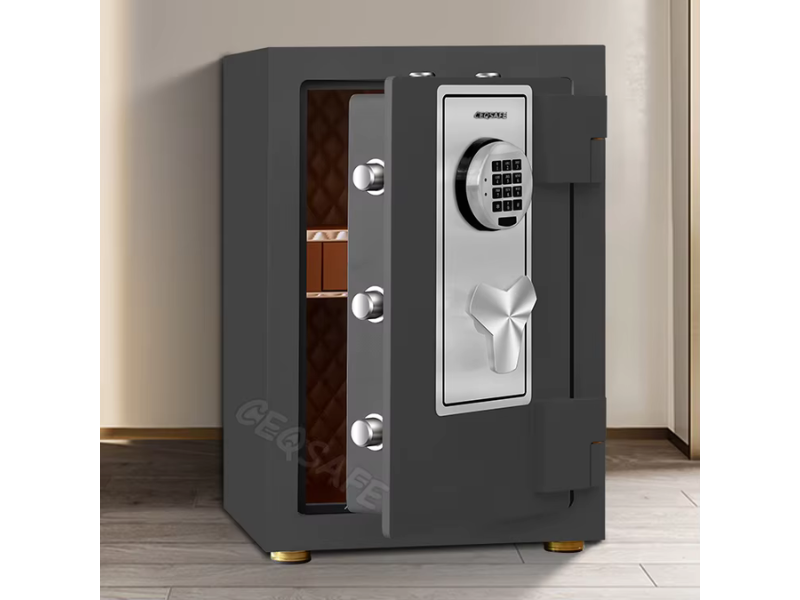
At its heart, a fire rating is a promise of survival. It certifies that a safe can maintain its internal environment below a critical temperature threshold while exposed to the extreme heat of a standardized fire test. The most common benchmarks are 30-minute, 1-hour, and 2-hour ratings. But what does this really mean? It means that for that specified duration, the interior of the safe will not exceed temperatures that would damage its contents. For paper documents, the critical point is around 350°F (177°C), as paper begins to char and deteriorate rapidly beyond this. Digital media like external hard drives and USB sticks are even more sensitive and can be damaged at lower temperatures. A safe like the referenced model, with a certified 2-hour fire-resistant time, is engineered to create a protective cocoon for its contents, withstanding external temperatures up to 1024°C for a full 120 minutes. This is achieved through robust, multi-layered construction, such as a 12mm steel door fortified with an 18mm fire-proof plate and a body built with 8mm steel and another 18mm of fire-proof material.
Major International Standards Explained
Globally, several independent organizations have established rigorous testing standards to evaluate fire resistance. These standards provide a consistent and reliable framework for comparing safes from different manufacturers. In North America, Underwriters Laboratories (UL) sets widely recognized benchmarks. Standards like UL 72 specifically pertain to fire tests for record-keeping equipment, defining the test procedures and performance criteria for safes designed to protect paper and digital media.
In Europe, the EN 13501-1 classification is a key standard for building materials and elements, including fire-resistant partitions and enclosures. It employs a comprehensive letter-based system (A to F) and often includes supplementary codes for smoke production and flaming droplets. For fire-resistant storage cabinets, especially those meant for flammable liquids, the EN 14470-1 standard is critical, specifying performance requirements and a classification based on fire resistance levels.
Beyond these, general product safety certifications also play a vital role in establishing a product's overall quality and safety. Common marks include the CE Mark, indicating conformity with health, safety, and environmental protection standards for products sold within the European Economic Area. The FCC mark deals with electromagnetic interference in the US, while RoHS restricts the use of hazardous substances in electrical equipment. A mark like UL94 is a standard for safety of flammability of plastic materials. The presence of these certifications, alongside specific fire test reports, adds a significant layer of credibility, assuring you that the product has been thoroughly vetted for safety and performance. When you see a safe that carries multiple international certifications, you can be more confident in its claimed capabilities.
What the Ratings Mean for Your Protection
Understanding the standards is one thing; interpreting how they translate to real-world protection is another. Let's break down the key factors. The fire-resistant time is your most direct indicator of endurance. A 2-hour rating, for instance, offers a substantial window for firefighters to respond and control a blaze before the integrity of the safe is compromised. This is a critical timeframe that can mean the difference between total loss and complete preservation.
However, time alone is not enough. The fire-resistant temperature is equally crucial. A rating that withstands 1024°C, for example, signifies a level of protection designed to survive severe structural fires, not just minor ones. This high threshold ensures the safe can endure intense heat without transferring it to the interior. Furthermore, the type of lock mechanism must be considered. In a fire emergency, reliable access is vital. A safe that offers multiple access methods, such as an electronic digital & fingerprint lock combined with a mechanical key lock for emergency override, ensures that you or authorized personnel can retrieve the contents quickly and reliably, even if the primary electronic system is affected by power failure or heat.
Finally, the overall build quality, reflected in the surface treatment, is a telling sign. A rust-prevention and environmental powder coating is not just about aesthetics; it enhances the durability and longevity of the safe, ensuring that its fire-resistant properties are not undermined by corrosion over time. This holistic approach to construction—from the core fire-proof materials to the external finish—is what separates a truly reliable safe from a basic one.
Choosing the Right Fire Rated Safe
Selecting the perfect fire-rated safe requires a practical, needs-based approach. Here is a straightforward guide to help you make an informed decision. Begin with a thorough risk assessment. Ask yourself what you need to protect. Is it primarily paper documents, sensitive digital media, or a combination of both? The answer will determine the required internal temperature threshold. Also, consider the value and replaceability of the items. For irreplaceable assets like original legal deeds, family photos, or crucial business data, investing in a higher-rated safe, such as a 2-hour model, is a prudent choice.
Next, match the safe's specifications to your environment and needs. Pay close attention to the certified fire-resistant time and temperature. Look for independent certifications from recognized bodies like those mentioned earlier. Do not just take the manufacturer's word for it; look for the official certification marks on the product documentation. Also, consider the internal capacity and physical dimensions. A safe like the KB-5840 model, with its substantial size and weight, offers significant storage space but also requires careful planning for installation and placement.
Finally, think about long-term usability and security. Evaluate the locking system for both convenience and emergency access. Consider factors like the quality of the finish for durability and the possibility of customization, like a customized color, to ensure the safe fits your aesthetic preferences. A safe is a long-term investment. By carefully matching certified fire ratings and robust construction features to your specific risks, you are not just purchasing a metal box; you are installing a proven guardian for your most valued possessions.

