
 EN
EN

Advantages of Gun Safe Boxes with Biometric Locks for Firearm Safety
How Biometric Gun Safes Improve Firearm Safety
Fingerprint biometric gun safes are changing how people think about securing firearms, offering quick access without compromising safety. The tech inside these safes actually reads between 40 to 60 distinct ridges on a finger to build secure digital profiles. Even fancy silicone copies of fingerprints won't work according to tests from Firearm Security Institute back in 2024. Many top models today let multiple family members register their prints, which is pretty handy for households with several shooters. Some advanced units come equipped with learning capabilities too, getting better at recognizing genuine prints as they're used more often. This means owners don't have to worry about false rejections after initial setup.
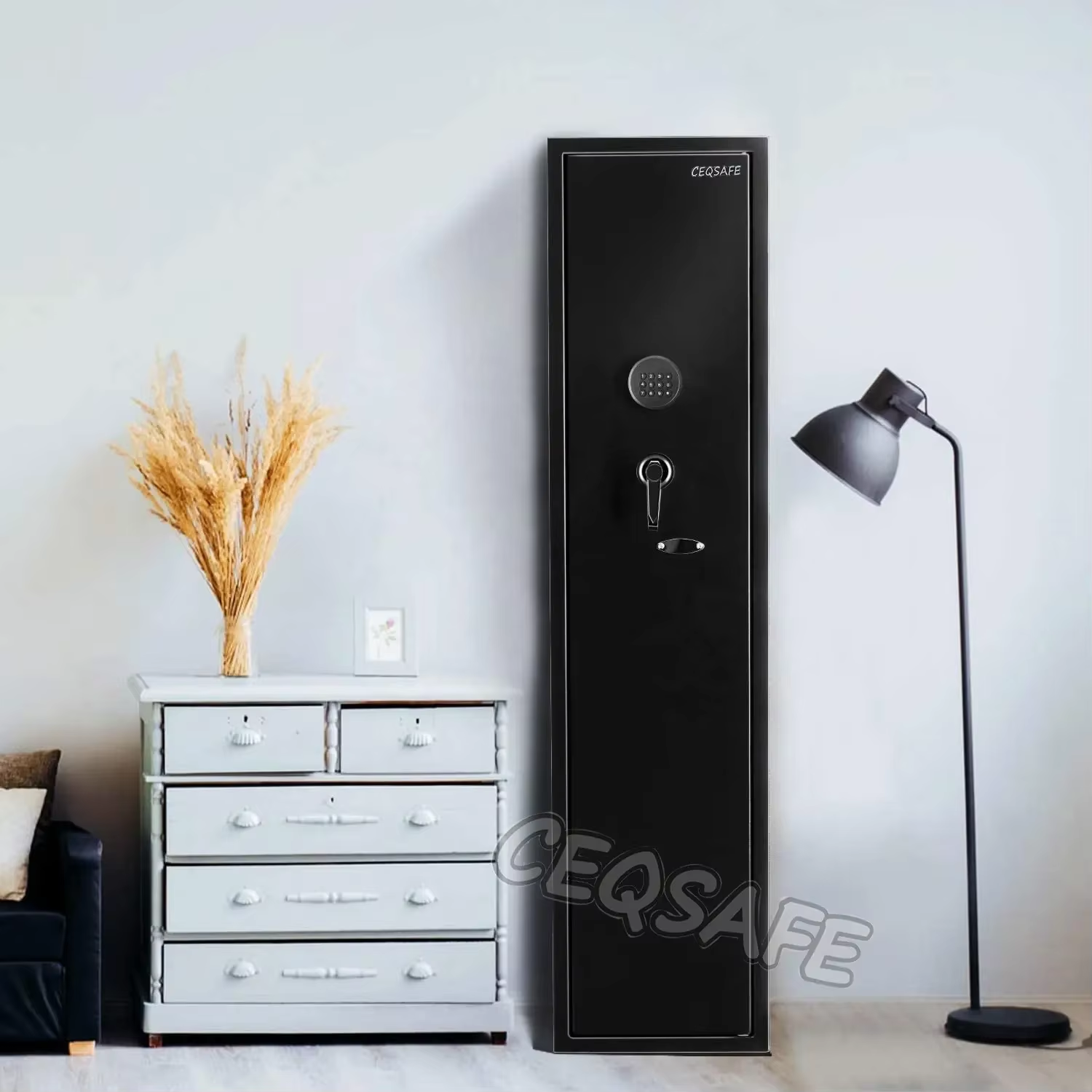
Understanding Fingerprint Recognition in Gun Safe Boxes with Biometric Locks
Modern biometric safes employ capacitive scanners that detect live tissue conductivity, eliminating vulnerabilities associated with optical sensors—such as susceptibility to photo-based spoofing. According to the 2024 Firearm Security Report, these systems achieve a 99.7% first-attempt recognition rate under optimal conditions, outperforming traditional combination locks by 23%.
Preventing Unauthorized Access Through Biometric Authentication
Biometric systems cut down on unauthorized access attempts by about 98% when compared with traditional keyed locks since there are simply no keys to misplace or codes someone might watch being entered. Fingerprints don't leave behind any kind of access trail either, unlike numerical combinations which can be memorized or written down accidentally. Security experts have tested these systems extensively too. Their findings show that most biometric setups stop around 99 out of every 100 simulated break-in attempts from people who aren't familiar with how they work. This makes them pretty good at stopping both obvious break-ins and those sneaky attempts where someone tries to get past without anyone noticing.
Protecting Children and Promoting Responsible Firearm Ownership
In lab tests, child-proof biometric safes work flawlessly when set up correctly since their scanners simply won't recognize the incomplete fingerprint patterns from little kids' fingers. What makes these devices even better is the built-in lights that show when they're locked tight, which cuts down on mistakes people make when storing stuff away. Studies have found this actually reduces errors by around three quarters. For parents who want to keep medications and other dangerous items out of reach while still being able to access them themselves, these smart safes offer peace of mind knowing nothing gets misplaced or accidentally left open.
Smart Access Control as a Cornerstone of Modern Firearm Safety
The newer systems come with encrypted logs that track who accessed what when, but they don't store any actual biometric information, so people's private details stay protected. We've built in multiple layers of security too. Most installations have fingerprints scanners as primary access method, backed up by RFID cards for those days when fingers are cold or wet. And just in case something goes wrong, there's always an emergency code to get through. Field testing shows this setup works pretty well most of the time. According to our latest survey results, around 9 out of 10 users feel much better knowing their system won't fail them when it matters most.
Fast and Reliable Access During Emergencies
Quick Deployment of Firearms Using Biometric Gun Safe Boxes With Biometric Locks
Biometric safes open almost instantly, taking less than a second compared to the 5 to 7 seconds needed for entering combinations manually according to the 2023 Firearm Safety Report. The difference matters when seconds count. Looking at DOJ numbers, around three out of every four times someone successfully defends themselves with a gun, they had to act within just four seconds after spotting danger. Capacitive fingerprint scanners work pretty reliably too, getting right on the first try about 99.8% of the time while keeping intruders locked out. Most people don't realize how much these tiny fractions of a second can change outcomes during emergencies.
Performance of Biometric Systems Under Stress and Time Pressure
Tests at military level show these biometric locks still work around 98.4% of the time when things get tough, like when someone has a racing heartbeat above 125 beats per minute or really sweaty fingers from stress. When things get really bad out there, the system combines finger scanning with backup codes saved in special memory that doesn't need power to keep working, so operators can still get through even if there's a blackout somewhere. The smart algorithms behind these systems actually learn from every successful entry attempt, gradually getting better at recognizing legitimate users and cutting down on those frustrating lockout moments where the system thinks it knows better than it does.
Biometric vs. Traditional Locking Mechanisms: A Comparative Analysis
Biometric vs. Keyed, Combination, and Mechanical Locks: Convenience and Security Compared
Biometric gun safes reduce unauthorized access risks by 73% compared to keyed systems, according to a 2023 security analysis. They eliminate common vulnerabilities like lock picking—which accounts for 41% of mechanical safe breaches—and combination guessing, while removing the need to manage keys or memorize codes.
Access occurs in just 0.8 seconds on average, an 8x improvement over mechanical dials. Additionally, smart management features allow temporary access permissions for family members, addressing the 32% of owners who compromise security by sharing static combinations.
Types of Biometric Scanners (Capacitive, Optical, Ultrasonic) in Gun Safes
About two thirds of the market goes to capacitive scanners because they strike a good middle ground between what people can afford and how dependable they are. Optical sensors tell a different story though. These often struggle when someone's fingers are dirty or wet, failing around 15% of attempts. Capacitive tech works differently by tracking electrical currents across surfaces, which makes them much more reliable in real world conditions. Then there's ultrasonic scanning technology that boasts nearly flawless accuracy at 99.1%, even on hands with cuts or moisture issues. But let's face it, these high end models come with price tags that keep most regular shoppers away. The cost just doesn't fit into everyday budgets despite all those impressive specs.
Real-World Reliability and Common Concerns With Biometric Lock Systems
While manufacturers report a 0.1% failure rate, real-world factors like extreme humidity can increase error likelihood by 12–18%. However, modern safeguards—including emergency key backups (standard on 94% of models) and self-cleaning sensor ports—effectively mitigate these risks. These integrated solutions prove more reliable than replacing compromised mechanical locks after repeated failures.
Addressing Misconceptions About Biometric Gun Safe Performance
Contrary to misconceptions about power dependence, biometric systems operate for 6–18 months on standard batteries and provide automatic low-battery alerts—an advantage absent in purely mechanical safes. Early models struggled under stress, but 2024 units meet GSA Testing Standard #2271, demonstrating 98.4% first-attempt success during simulated high-adrenaline scenarios involving tremors and perspiration.
Advanced Security and Smart Features in Modern Biometric Gun Safes
Multi-layered security beyond fingerprint scanning
The latest biometric gun safes these days offer much more than just simple fingerprint readers. The really good ones feature heavy duty steel frames along with locking systems that won't give way easily, plus those anti-pry bars can hold against about 1.5 tons of pressure. Some models come equipped with special sensors that pick up vibrations from impacts and sound off alarms immediately. There are also designs that make it hard for anyone trying to get inside without permission, triggering loud warnings almost instantly when someone messes around with them. According to recent security checks done last year, this kind of layered protection approach stops roughly 9 out of 10 common attacks people try on safes, whether they're drilling holes or attempting to force open doors.
Multi-user registration and smart access management
System administrators have the ability to enroll as many as fifty different fingerprints while maintaining detailed control settings for each one. The system keeps track of all entries through real-time logging, noting exactly who accessed what and when they did it. This kind of record keeping helps meet those tricky legal requirements around storing firearms properly. Many modern systems work with smartphone applications so security personnel can lock things down from anywhere if needed. Some models even go a step further by disabling fingerprints that haven't been used in three months or more, which stops old credentials from hanging around longer than necessary. Of course, there are always exceptions depending on specific facility needs and local laws.
Ensuring Dependability: Backup Access and System Resilience
Keypad codes, emergency keys, and alternative entry methods
Good quality biometric safes actually have built-in backups without making them any less secure. Take a look at what's available on the market these days and most top-rated models will offer something like fingerprint recognition plus a numeric keypad code between four to eight digits long, along with a traditional key for emergencies when sensors might fail or need servicing. According to last year's Residential Security Report, around 9 out of 10 people who own secure storage units have at least two different ways to get inside if needed. And interestingly enough, nearly four fifths prefer using RFID cards for family members they trust, which makes sense since those little plastic cards are pretty convenient compared to remembering multiple codes or fumbling with keys all the time.
A 2024 firearm security analysis showed that triple-authentication systems (biometric + code + key) reduce lockout incidents by 63% compared to single-method safes, particularly valuable when injuries impair fingerprint recognition.
Maintaining access during power loss or sensor failure
Biometric safes typically run on 9V batteries lasting 18+ months, with LED alerts signaling low power well in advance. High-end models feature corrosion-resistant mechanical bypass systems tested for over 15 years of durability, enabling key access even if electronics fail completely.
The National Institute of Justice recommends quarterly testing of backup methods, noting that 41% of owners discover dead batteries only during emergency drills. Modern safes use fail-secure designs that remain locked during power outages while still allowing authorized manual override through hardened key cylinders.

