
 EN
EN

Why Do Fireproof Safes Have Multiple Fire Ratings?
The Misconception: Why 'Fireproof Safe' Is a Marketing Term, Not a Technical Guarantee
Many companies think when they buy a "fireproof safe" they get total protection from flames, but the truth is quite different according to industry standards. There's actually no such thing as completely fireproof storage solutions. Every safe has its limits set through strict tests like those done under UL 72 standards. The word itself suggests something impossible to burn, but what happens during actual fires tells another story. Paper starts turning to ash around 350 degrees Fahrenheit, and sensitive digital stuff can be damaged even at just 125 degrees. These temperatures are hit in about eight out of ten building fires according to recent NFPA research. This gap between what marketers say and what really happens leads to misplaced confidence, especially for firms keeping valuable documents or equipment that can't be replaced. Insulation inside safes sometimes fails way before expected, which happened in roughly 40% of business fire cases examined by Ponemon Institute researchers. The bottom line? Businesses need to look closely at fire resistance ratings based on their particular needs rather than trusting vague advertising promises.
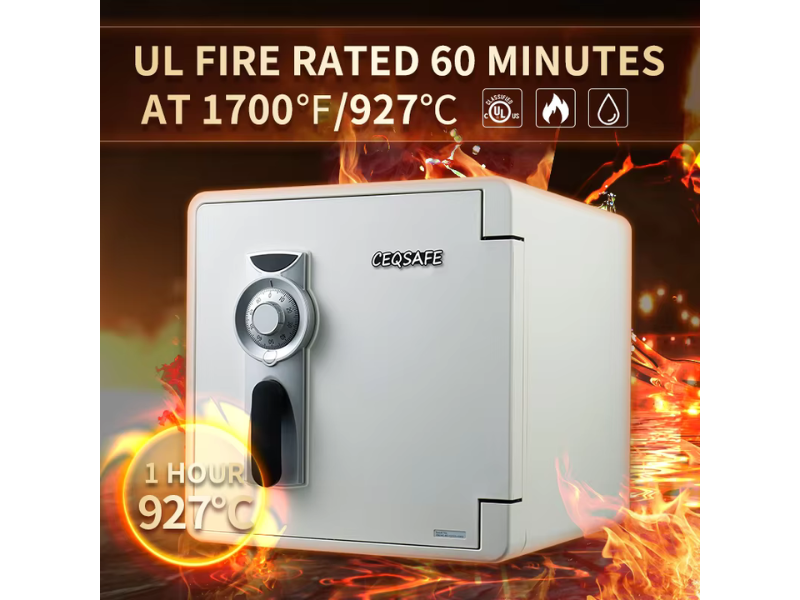
The Standards: How UL and Intertek Fire Ratings Define Real Protection for Fireproof Safes
When companies get third party certifications, they turn those fluffy marketing statements into something actual that can be measured. Organizations like UL, which stands for Underwriters Laboratories, along with Intertek who uses the ETL mark, put safes through their paces in furnace tests that mimic what happens during real fires. What these independent testing facilities check? Mainly two things really matter. First is how long the safe can hold up against heat, ranging from 30 minutes all the way up to 2 whole hours. Second is making sure the inside stays cool enough even when outside temps hit over 1,700 degrees Fahrenheit, which is basically hotter than most home ovens ever get. These tests give consumers concrete numbers instead of just vague promises about protection.
UL 72 (Class 350) vs. UL 125 — Protecting Paper vs. Digital Media in a Fireproof Safe
Material vulnerabilities dictate distinct testing protocols:
- Class 350 (UL 72): Preserves paper documents by ensuring interior temperatures stay ≤350°F (177°C)—preventing combustion or irreversible embrittlement.
- Class 125 (UL 72): Protects digital media (hard drives, SSDs, USBs) by capping internal heat at 125°F (52°C), well below the 150°F threshold where magnetic and solid-state storage begins to degrade.
Temperature Logic: Why 1,700°F Exterior and 350°F/125°F Interior Limits Dictate Fireproof Safe Performance
Fire dynamics justify these thresholds:
- Exterior Benchmark: 1,700°F reflects peak ceiling temperatures observed in structural fires (NFPA).
-
Interior Controls:
- Paper begins charring near 400°F; 350°F provides a critical safety margin.
-
Hard drives suffer mechanical failure above 150°F; 125°F accommodates transient heat spikes during fire exposure.
Test protocols also include 3-story drop tests to simulate structural collapse—validating real-world resilience beyond thermal endurance.
The Reality: How Fire Duration, Location, and Heat Transfer Impact Fireproof Safe Effectiveness
Residential vs. Commercial Fires: Why NFPA Data Shows 1-Hour Ratings Often Exceed Real-World Exposure
The ratings on fireproof safes come from tests done in labs, but actual fires behave completely differently out there in the real world. According to NFPA numbers from 2023, most house fires burn for around 30 minutes max before someone puts them out, so that 1 hour rated safe actually gives folks some extra time when their home catches fire. Things look different though for businesses since these fires tend to burn much longer because there's just more stuff to catch flame. We've seen cases where safes labeled for paper protection worked fine during a small office fire, but completely failed during warehouse fires where the heat kept going way past what they were tested for. The bottom line is that safe ratings don't tell the whole story about how well they'll perform in different situations.
Radiant Heat Failure: Why Attic or Garage Fires Can Defeat Even 1-Hour Fireproof Safes
Where something is placed makes all the difference when it comes to how well it performs. Spaces like attics and garages just don't have the same kind of thermal mass or insulation as living areas do, which means fires can get dangerously hot - over 1700 degrees Fahrenheit - much quicker there. Radiant heat works differently too. It travels through the air without actually touching anything, so regular insulation doesn't stop it at all. When this happens, temperatures inside storage containers rise rapidly past what most safety standards are built for. A container rated to last one hour might fail completely within 45 minutes if exposed to intense radiant heat, putting valuable documents and sensitive electronics at serious risk. For anyone concerned about protecting important items, making sure they're stored somewhere safe from these dangerous conditions isn't optional, it's absolutely essential.
The Strategy: Selecting the Right Fireproof Safe Rating by Asset Type and Business Risk Profile
Decision Framework: Class 350 (1-hour) for Home Offices vs. Class 350 (2-hour) for Legal Records vs. Class 125 for Digital Media
When it comes to choosing fire resistant safe protection, people need to match their safety standards with what they're protecting and where those items are kept. Home office spaces that store regular paper stuff usually get away with Class 350 safes rated for one hour protection. The National Fire Protection Association reported in 2023 that most house fires don't last longer than half an hour anyway. But law offices dealing with important documents that can't be replaced? They really need to go for the two hour Class 350 rating because business buildings tend to burn for over sixty minutes when fires break out. And then there's digital stuff like hard drives and memory cards which start getting damaged once temperatures hit around 125 degrees Fahrenheit. For these items, Class 125 protection makes sense no matter how long the fire lasts.
Consider these critical factors:
- Location risks: Attic or garage placements demand higher ratings due to radiant heat exposure.
- Asset replacement costs: Medical practices storing patient histories may require 2-hour protection—even in office settings—due to regulatory and liability implications.
- Insurance requirements: Some policies mandate specific certifications (e.g., UL Class 350 or Class 125) for coverage validation.
A manufacturing plant storing both blueprints and temperature-sensitive media might require dual-rated safes—compartmentalized to meet distinct thermal thresholds for each asset type.

