
 EN
EN

Key Features That Make Antitheft Safes Effective Against Theft Attempts
Core Security Design: Understanding What Makes an Antitheft Safe Resistant to Break-Ins
Defining Antitheft vs. Burglary-Resistant Safes With UL 1037 Certification as a Benchmark
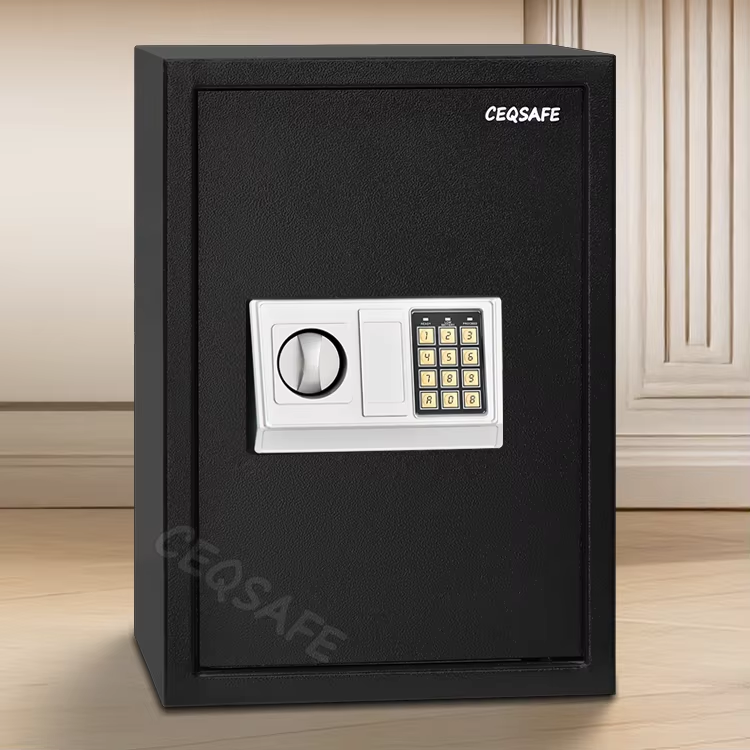
Most antitheft safes are built to stop those quick grab-and-go attempts by opportunists, not the kind of sustained attack professionals would throw at them. That's what sets them apart from the more robust burglary-resistant options on the market. Take UL 1037 certification as an example here in North America. For a safe to get this rating, it needs to hold up for five whole minutes when someone tries to pry, drill, or bash it with regular tools anyone might find around. Across the pond in Europe though, their EN-certified safes face much tougher tests. These have to survive over ten minutes of assault from serious gear like oxy-fuel torches, which makes sense given the different security concerns there compared to our part of the world.
The Importance of Forced Entry Resistance in Antitheft Safe Performance
The ability to withstand forced entry depends largely on the quality of materials used and how secure the locking system is. When it comes to safes, those built with at least 12 gauge steel plus reinforced bolts hold up much better against sledgehammers compared to lighter options. According to recent data from Safe Security Report in 2023, safes made with 14 gauge steel and triple point locks actually last about 43 percent longer than their 16 gauge counterparts. These numbers make sense when we look at what happens during actual break-ins. Most home invasions wrap up pretty quickly too. The FBI's crime reports from 2022 show that around three out of four residential burglaries are completed within just six minutes. That means whatever security measure stops intruders fast makes all the difference in protecting valuables.
How Compliance With International Standards (UL, EN, SABS) Validates Antitheft Capabilities
Third-party certifications offer measurable assurance of security performance:
- UL 1037 (North America): Simulates smash-and-grab attacks with hand and power tools
- EN 1143-1 (Europe): Tests resistance to explosives and circular saws
- SABS 953 (South Africa): Combines burglary protection with fire-resistance requirements
Safes meeting multiple standards demonstrate 68% greater penetration resistance in controlled tests compared to non-certified units (Global Safe Alliance 2023), underscoring the value of cross-standard validation.
Bridging the Gap: High-Security Engineering vs. Consumer Misconceptions About Safe Durability
A lot of people still think heavier means safer when it comes to safes, even though engineering has come a long way. According to the Consumer Safe Survey from 2023, about 62 percent of folks believe this. But modern safe makers have figured out different ways to keep things secure without all the extra weight. Take a look at how they're building these new antitheft models now. The doors are shaped in angles that make it hard for anyone trying to pry them open. Inside, there's this combination of tough steel layers mixed with ceramic materials that stop drills dead in their tracks. These newer designs actually weigh around 22% less than old fashioned solid steel safes, yet they resist drilling attempts almost 19% better too. So what does this mean? Smart engineering beats just throwing more metal at the problem every time.
Advanced Locking Systems: The First Line of Defense in Antitheft Safes
Comparing Lock Types: Mechanical, Electronic, Keypad, and Biometric Mechanisms
There are four main types of locking systems found in today's anti-theft safes, all with their own pros and cons. Mechanical locks made with tougher materials stand up to physical attacks about 34 percent better than regular key systems when put through stress tests, as shown by research from Lowe and Fletcher back in 2024. Keypad and electronic locks get rid of the problem of lock picking entirely, but they need backup plans when there's no electricity. Biometric systems have gotten pretty fast these days, authenticating someone within less than a second thanks to encryption standards similar to what banks use. A study on access control published in 2025 confirmed this speed advantage. Still, these systems aren't foolproof since things like extreme temperatures or humidity can sometimes mess with their performance.
Electronic vs. Mechanical Lock Reliability Under Stress and Environmental Extremes
Mechanical locks maintain operation across extreme temperatures (-25°C to +65°C) and impacts where 23% of electronic systems fail due to circuit damage. However, UL-certified electronic locks with dual-conductor keypads resist manipulation tools like lock picks or hydraulic jacks 9.1 minutes longer than mechanical counterparts under equivalent attack conditions.
Biometric Access Controls: Balancing Convenience and Security in Modern Antitheft Safes
Biometric systems provide quick access without keys, achieving around 97% recognition on the first try when conditions are just right. But things get tricky in humid environments where false rejections jump threefold, making these systems frustrating for users. Security professionals often suggest mixing fingerprint tech with delayed PIN entry as a better approach. This combination seems to slash unauthorized attempts by roughly 80% according to some tests, outperforming systems that rely solely on biometrics.
Case Study: Biometric Failure Rates in Extreme Conditions and Mitigation Strategies
A 2025 evaluation of 120 biometric safes exposed to industrial conditions found 3% developed sensor issues after six months of dust exposure. Leading manufacturers now integrate multi-spectral scanners and self-cleaning mechanisms. When paired with mechanical backup locks, these upgrades achieved 99.4% operational reliability and extended forced-entry resistance by an average of 14 minutes.
Reinforced Construction and Physical Barriers That Delay and Deter Intruders
Heavy-Duty Materials: Hardened Steel and Composite Layers in Antitheft Safe Bodies
Today's high security safes are built with thick 10 to 12 gauge hardened steel mixed with composite materials like ceramic plates that really stand up against all sorts of attacks from cutters, drills, and heat tools. The special construction actually soaks up about three times more force compared to regular steel according to those safety tests they run. Some models have these forged alloy linings inside too, which makes it tough for thieves using angle grinders to get through. Most importantly, this extra resistance gives security systems around 15 minutes before someone can break in, giving plenty of time for alarms to trigger and authorities to respond before anything gets stolen.
Anti-Drill Plates and Their Role in Protecting Lock Mechanisms From Targeted Attacks
High-carbon steel plates (4–8 mm thick) shield lock cylinders from drill-bit penetration. Independent tests show they extend breach times by 65% compared to unprotected models. Octagonal carbide inserts shatter standard drill tips, forcing attackers to abandon focused assaults.
Tamper-Proof Hinges and Dual-Layer Protection: Preventing Hinge-Side Compromise
Internal welded hinges and dual-layer door construction eliminate external hinge vulnerabilities. Interlocking boltwork distributes prying force across 8–12 points, reducing hinge failure risk by 83% in EN-certified safes.
Data Point: Reinforced Construction Increases Penetration Time by Up to 70%
According to a 2023 safe security study, UL-certified models with multi-layer walls resisted breach attempts for 22+ minutes—70% longer than non-reinforced units.
Trend Analysis: Rising Adoption of Multi-Layered Physical Defenses in Premium Models
The use of five or more material layers in premium antitheft safes has risen to 78% among manufacturers, up from 42% in 2020, driven by increasing accessibility of advanced burglary tools.
Integration of Anti-Pry Edges and Concealed Seams to Resist Leverage Attacks
Beveled door edges and laser-welded seams prevent crowbar insertion, capable of withstanding over 2,500 psi of prying force—equivalent to industrial hydraulic spreaders.
Automated Defense Mechanisms: Relocking Devices and Tamper Alarms
How Relocking Devices Activate During Manipulation Attempts to Secure Contents
Relocking devices deploy automatically when tampering is detected, creating a secondary barrier behind the primary lock. Triggered by sensors during drilling, prying, or impact, these mechanisms ensure contents remain protected even if the main lock is compromised. UL 1037 mandates relockers withstand 10 minutes of direct attack, reinforcing delayed-access principles.
Mechanical Relockers vs. Digital Monitoring: Layered Defense for Maximum Resilience
Mechanical relockers use hardened steel plates that jam lockworks during physical assaults, while digital versions rely on pressure and vibration sensors. Hybrid systems combining both technologies delay intrusions up to 70% longer than single-system designs, minimizing single-point failure risks.
Tamper Alarms and Real-Time Alerts via Smart Home Integration
Advanced antitheft safes integrate Wi-Fi connectivity to trigger real-time alerts and activate 100+ dB sirens during breach attempts. Models with dual sensors (motion + contact) reduce false positives by 52% compared to single-sensor variants, enhancing reliability in dynamic environments.
Balancing Sensitivity: Addressing False Triggers While Maintaining Breach Detection
Top-tier safes employ machine learning algorithms to analyze vibration signatures, distinguishing between normal handling and attack patterns. A 2023 Safe Security Institute study found algorithm-driven systems maintained 98% breach detection accuracy while reducing false alarms by 63%, essential for deployment in busy homes or retail spaces.
Evaluating Certification Standards to Identify Truly Theft-Resistant Safes
Why UL 1037 certification is critical for verifying antitheft safe performance in North America
UL 1037 remains the gold standard for antitheft safes in North America, testing resistance to prying, drilling, and impact for at least 5 minutes using common tools. Unlike vague marketing claims, this certification requires specific design features such as anti-pry edges and reinforced boltwork, ensuring compliance with rigorous UL 1037 certification requirements.
Global equivalents: Comparing EN (Europe) and SABS (South Africa) standards for theft resistance
Regional certifications reflect local threats:
| Standard | Region | Key Requirements | Testing Duration |
|---|---|---|---|
| EN 1143-1 | Europe | Resistance to explosives & circular saws | 60+ minutes |
| SABS 0122 | South Africa | Protection against oxy-acetylene torch attacks | 30+ minutes |
European standards emphasize defense against thermal cutting, while South African norms address prevalent torch-based entry methods. Both exceed UL 1037 in duration and tool severity, highlighting regional adaptation in security design.
Data point: Certified antitheft safes resist attacks three times longer than non-certified units
Underwriters Laboratories (2023) reports certified safes withstand break-in attempts for 29 minutes on average, compared to 9 minutes for uncertified models. This 220% increase stems directly from mandated steel thickness (≥10mm) and lock shielding—features often missing in consumer-grade products.

